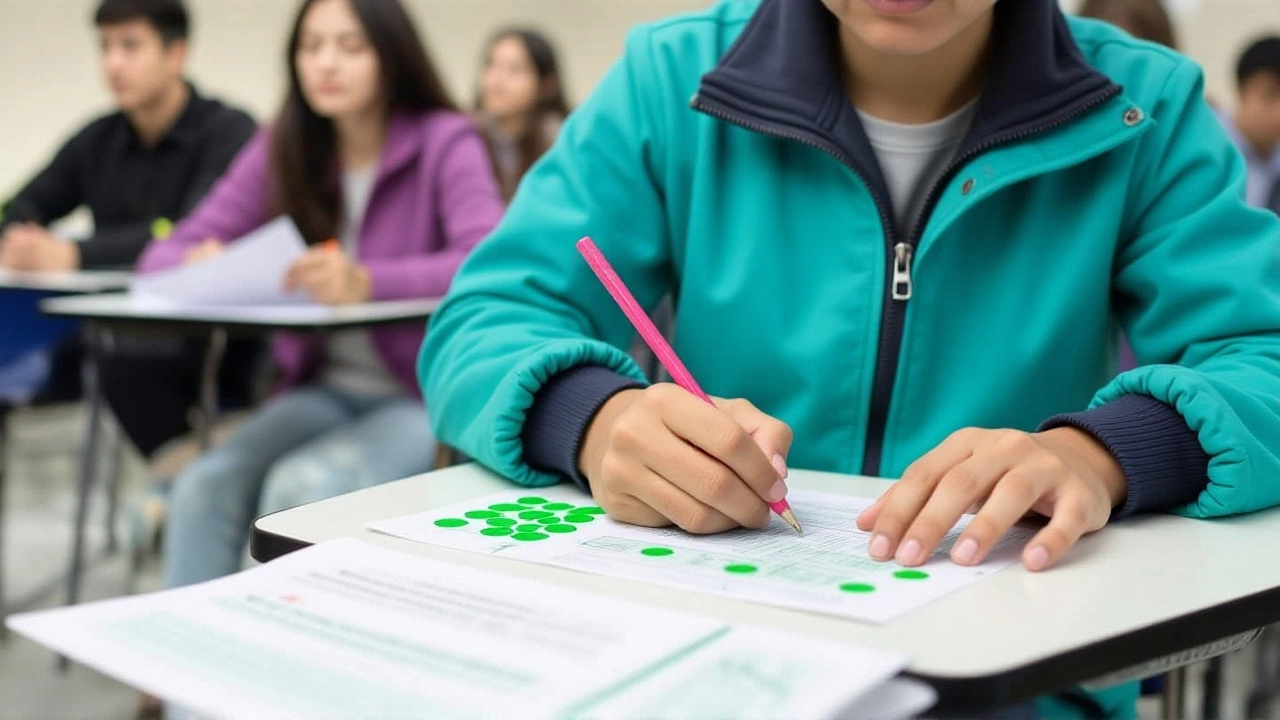
The clock is ticking for thousands of aspiring engineers in eastern India. The West Bengal Joint Entrance Examinations Board (WBJEEB) officially opened the application window for the 2022 cycle, setting the stage for one of the state’s most competitive academic races.
Applications went live on the official portal, wbjeeb.nic.in, with a hard deadline of January 10, 2022, at 6:00 PM IST. If you missed that cutoff, the door slammed shut. But for those who made it in, the real test awaits on April 14, 2022, when the written examination will take place across designated centers in Kolkata and other major cities in West Bengal.
Who Is Behind the WBJEE?
Here’s the thing: this isn’t just another random test. It’s the gateway to premier engineering, technology, pharmacy, and architecture programs across the state. Established in 1962 by the Government of West Bengal, the board has spent six decades centralizing admissions. Before WBJEE, the process was fragmented, chaotic, and often opaque. Now, it’s a single, standardized metric.
The board operates from its headquarters at DB-118, Sector-I, handling everything from notification releases to result declarations. For the 2022 cycle, they’re managing applications for Bachelor of Engineering (B.E.), Bachelor of Technology (B.Tech.), and Bachelor of Pharmacy (B.Pharm.) courses in both government and self-financed private institutions.
Breaking Down the Application Process
The entire process is digital. No paper forms. No postal delays. Just you, your laptop, and the clock. Here’s how it works:
- Registration: You start by creating an account on wbjeeb.nic.in, providing basic details like name, gender, and date of birth. You’ll generate a password here—keep it safe. Losing it means jumping through hoops later.
- Filling the Form: Next comes the detailed part. Educational history, contact info, category details. Accuracy matters. A typo in your roll number can cost you dearly during counseling.
- Document Uploads: Scan your photo and signature. The specs are strict: specific file sizes, white background for photos. Get this wrong, and your application gets flagged.
- Payment: Finally, pay the fee via net banking, credit card, or debit card. The amount varies based on your category and gender.
For general category male candidates, the fee is ₹500. Women in the same category pay ₹400. Reserved categories (SC/ST/OBC-A/OBC-B) see reduced fees, ranging from ₹300 to ₹400 depending on gender. Third-gender candidates pay between ₹200 and ₹300. It’s a tiered system designed to make access more equitable, though the financial barrier remains a talking point among educators.
Eligibility: The Hard Numbers
You can’t just show up and hope for the best. The board has set clear academic thresholds. To qualify for engineering or technology programs, you must have passed your 10+2 (or equivalent) exam with Physics and Mathematics as compulsory subjects. Chemistry, Biotechnology, Biology, Computer Science, or a Technical Vocational subject counts as the third core subject.
Here’s the catch: marks matter. General category students need a minimum aggregate of 45% in these three subjects. For reserved categories (SC, ST, OBC-A, OBC-B, PwD), the bar drops to 40%. And there’s another hurdle: English. You must score at least 30% in English separately. This rule often trips up students who excel in science but struggle with language arts.
Age limits? Mostly flexible. You must be at least 17 years old by December 31 of the admission year. There’s no upper age limit for most courses, except Marine Engineering, which caps out at 25 years. Citizenship is non-negotiable: you must be an Indian citizen or hold OCI status.
Exam Structure: What to Expect on April 14
The WBJEE is not a multiple-choice clickfest. It’s a pen-and-paper affair, lasting four hours total. But it’s split into two sessions with a one-hour break in between. Why? To manage fatigue and logistics. The exam is conducted in both Bengali and English, ensuring regional accessibility.
The syllabus covers Physics, Chemistry, and Mathematics extensively. Questions range from direct formula applications to complex problem-solving scenarios. Past papers suggest a trend toward conceptual clarity over rote memorization. If you’ve been cramming without understanding, you’ll feel it on exam day.
Interestingly, the format hasn’t changed much in recent years. The 2024 and 2026 cycles followed similar patterns, indicating stability in the board’s approach. This consistency helps students prepare, knowing exactly what they’re walking into.
Results and Counseling: The Aftermath
After the exam, the wait begins. In 2022, results were declared on June 17, roughly two months after the test. That gap feels eternal when you’re refreshing the page every five minutes. Results are published online at wbjeeb.nic.in, where candidates log in with their application number and password (or date of birth) to view scores, ranks, and qualifying status.
Once results are out, counseling begins. This is where strategy meets reality. Seats are allocated based on merit, category reservation, and college preferences. Candidates must verify documents in person—a crucial step that catches many off-guard if they haven’t kept original certificates handy. Fees must be deposited to secure seats. Miss the deadline, and you lose your spot.
In recent years, the board has streamlined duplicate confirmation requests. If you lose your confirmation page, you have 60 days after result declaration to apply for a duplicate by submitting a demand draft of ₹500 to the board office in Kolkata. After that window closes, recovery becomes nearly impossible.
Why This Matters Beyond 2022
The WBJEE isn’t just about getting into college. It shapes career trajectories for thousands of young professionals in India’s industrial heartland. West Bengal hosts some of the country’s oldest and most respected technical institutes, including Jadavpur University and IIT Kharagpur (though IITs have separate entrances). Securing a seat here opens doors to global opportunities.
Moreover, the board’s evolution reflects broader trends in Indian education: digitization, transparency, and standardization. From manual processes in the 1960s to fully online operations today, the shift mirrors national efforts to modernize higher education infrastructure.
Frequently Asked Questions
When was the WBJEE 2022 exam held?
The WBJEE 2022 written examination took place on April 14, 2022. It was a four-hour pen-and-paper test divided into two sessions with a one-hour break in between, conducted across various centers in West Bengal.
What are the eligibility criteria for WBJEE?
Candidates must have passed 10+2 with Physics and Mathematics as compulsory subjects, plus one of Chemistry, Biotechnology, Biology, Computer Science, or Technical Vocational subjects. General category students need 45% aggregate; reserved categories need 40%. A minimum of 30% in English is also required.
How much does the WBJEE application cost?
Application fees vary by category and gender. General male candidates pay ₹500, while women pay ₹400. SC/ST/OBC candidates pay between ₹300–₹400. Third-gender candidates pay ₹200–₹300. Payments are made online via net banking or cards.
When were the WBJEE 2022 results declared?
Results for WBJEE 2022 were announced on June 17, 2022, approximately two months after the exam. Candidates could check their scores and ranks on the official website using their application number and password.
Is there an age limit for WBJEE?
Candidates must be at least 17 years old by December 31 of the admission year. There is no upper age limit for most courses, except Marine Engineering, which requires candidates to be under 25 years old by the same date.