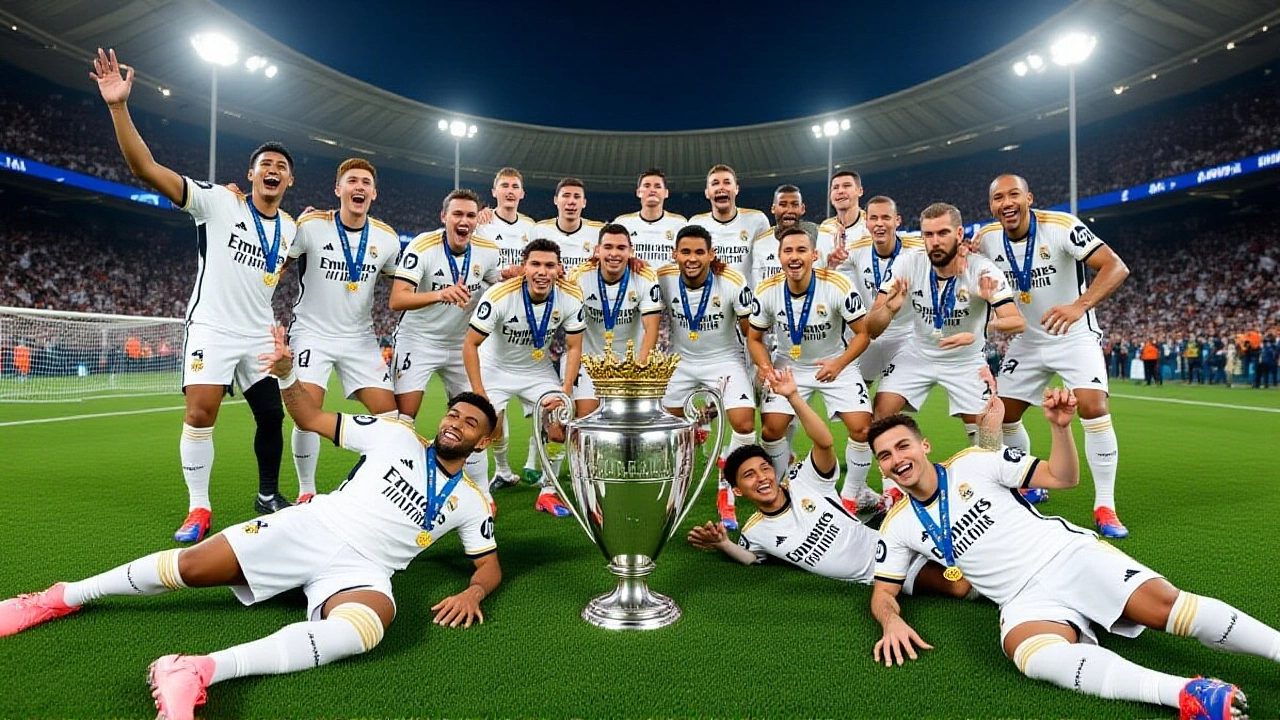
Real Madrid didn’t just win the UEFA Champions League final — they rewrote history. On a crisp evening in Munich, the Spanish giants defeated Borussia Dortmund 2-0 to claim their 15th European Cup, extending their unmatched lead in the competition’s 69-year history. The match, played on June 1, 2025, at the Allianz Arena, ended with a quiet but devastating efficiency: a 37th-minute strike by Vinícius Júnior and a 78th-minute header from Jude Bellingham sealed the deal. No team in European football has ever come close to this kind of dominance. And yet, for Real Madrid, it felt almost routine.
A Legacy Cemented in White
Founded in 1902 as Madrid Football Club, Real Madrid has spent nearly a century turning football into art. Known as Los Blancos — The Whites — they’ve built an empire on composure under pressure, tactical genius, and an uncanny ability to deliver when it matters most. This win wasn’t just about trophies; it was about legacy. They now hold more Champions League titles than the next three clubs combined. Bayern Munich? Seven. AC Milan? seven. Real Madrid? Fifteen. The gap isn’t just wide — it’s a canyon.
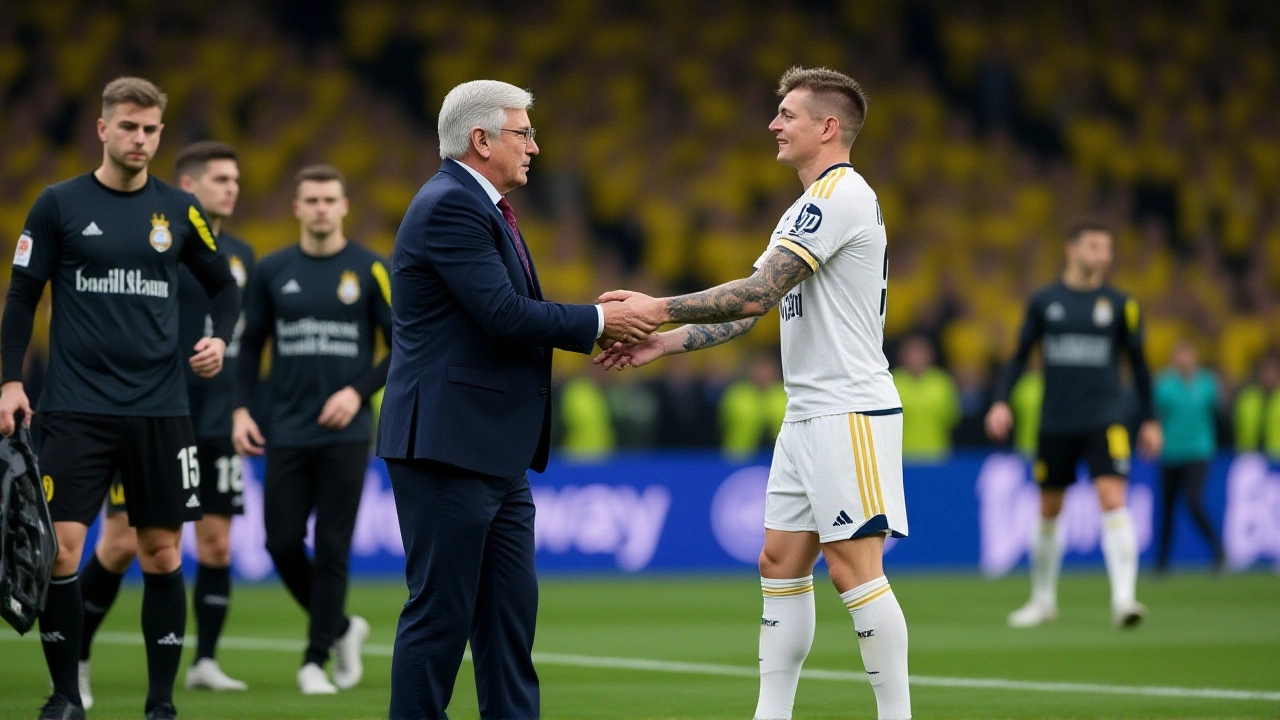
What made this final so remarkable wasn’t the scoreline, but the context. Borussia Dortmund, a team that had stunned Manchester City in the semifinals, came into the match with momentum, energy, and a young core led by 19-year-old sensation Youssoufa Moukoko. But Real Madrid, led by 37-year-old captain Luka Modrić, played with the patience of a master clockmaker. They didn’t need to dominate possession. They needed to strike. And they did — twice.
The Quiet Revolution
For months, fans and pundits fixated on Kylian Mbappé — the French superstar who joined Real Madrid in the summer of 2024 after a dramatic departure from Paris Saint-Germain. His performances in the knockout stages were electric: a hat-trick in Athens against Olympiacos, a four-goal explosion in a single match, and a league-leading nine goals in this year’s Champions League. But in the final? He was quiet. Marked. Neutralized.
That’s the twist. Real Madrid’s victory wasn’t built on Mbappé’s brilliance — it was built on the system. The midfield trio of Modrić, Bellingham, and Federico Valverde controlled the tempo. The defense, anchored by Antonio Rüdiger and Éder Militão, held firm. And when the chance came, Vinícius, the Brazilian winger who’s become the heartbeat of this team, turned a single pass into a moment of history.
It’s easy to forget: this was Real Madrid’s first Champions League win since 2022. In between, they lost to Manchester City in the 2023 final and were knocked out early in 2024. There were whispers — about aging stars, about a changing of the guard. Those whispers are gone now. The club didn’t rebuild. It reinvented.
The Road Ahead: A New Challenge
With this title secured, Real Madrid’s focus immediately shifts to the 2025–26 season — and the new-look Champions League format. For the first time, the competition begins with a 36-team league phase instead of a traditional group stage. And Real Madrid have been drawn into a group with two of the most formidable clubs in the world: Manchester City and Liverpool.
That’s not just a tough draw — it’s a gauntlet. City, the reigning Premier League champions and 2023 Champions League winners, have spent the last five years building a machine. Liverpool, with their relentless high press and Anfield roar, remain one of Europe’s most dangerous sides. Real Madrid will need to be sharper, faster, and more ruthless than ever.
Domestically, their next match is against Rayo Vallecano on November 9, 2025, at 3:15 PM UTC in LaLiga. It’s a routine fixture on paper — but in Madrid, every game carries the weight of expectation.
What This Means for European Football
This win isn’t just about Real Madrid. It’s about the entire ecosystem of European football. The club’s ability to consistently win at the highest level — despite financial fair play scrutiny, salary caps, and the rise of billionaire-backed rivals — proves that tradition, culture, and institutional knowledge still matter. While clubs like PSG and Manchester City spend hundreds of millions on transfers, Real Madrid keep building through La Fabrica, their famed youth academy. This year’s starting XI included four academy graduates.
Meanwhile, the rest of Europe watches. Dortmund’s young core may have lost this final, but they’re not done. Arsenal, the only team to win all five of their group stage matches this season, are emerging as dark horses. And with the new league phase, the competition is more open than ever.
But for now, Madrid breathes. The city is quiet. Not because it’s sleepy — but because it’s full.
Frequently Asked Questions
How many Champions League titles has Real Madrid won, and why is this record significant?
Real Madrid has won 15 UEFA Champions League titles, far more than any other club in history. The next closest, Bayern Munich and AC Milan, have seven each. This record reflects decades of sustained excellence, strategic recruitment, and a culture of winning that no other club has matched. It’s not just a statistic — it’s a symbol of footballing supremacy.
Who scored the goals in the 2025 Champions League final, and why wasn’t Kylian Mbappé the star?
Vinícius Júnior opened the scoring in the 37th minute, and Jude Bellingham sealed the win with a header in the 78th. Mbappé, despite being the league’s top scorer with nine goals, was tightly marked and largely neutralized. Real Madrid’s win was a team effort — proof that even with a global superstar, their strength lies in collective discipline, not individual brilliance alone.
What’s new about the 2025–26 Champions League format, and how does it affect Real Madrid?
The 2025–26 season introduces a 36-team league phase, replacing the traditional group stage. Teams play eight matches against random opponents, with the top eight advancing directly to the round of 16. Real Madrid’s group includes Manchester City and Liverpool — two of the most consistent and well-resourced clubs in Europe. This format increases the risk of early exits but rewards consistency — something Real Madrid has mastered for decades.
How did Real Madrid’s youth academy contribute to this victory?
Four players in the starting XI — including Bellingham (who came through the academy’s youth system before joining from Borussia Dortmund), Endrick, and two others — were developed at La Fabrica. This underscores Real Madrid’s long-term strategy: investing in homegrown talent rather than relying solely on expensive transfers. It’s a model that balances financial responsibility with competitive success.
What’s next for Real Madrid after this title?
Their next match is against Rayo Vallecano in LaLiga on November 9, 2025. Beyond that, they’ll prepare for the new Champions League league phase, which begins in September 2025. With a full squad and no major injuries, they’re already being tipped as favorites to defend their title. The pressure is immense — but for Real Madrid, it’s just another Tuesday.